YOU STOPPED WALKING YOUR DOG. NOW WHAT?

You stopped walking your dog. Now what?
For some dogs, stopping walks, or simply walking less, can bring a huge sense of relief.
Perhaps your dog has been barking and lunging at other dogs, freezing, pulling frantically, scanning for danger, chasing anything that moves or becoming so over-excited that every walk feels exhausting.
Perhaps you’ve started dreading them too, planning routes around what you might meet, changing direction when you see another dog in the distance and coming home wondering why something that is supposed to be enjoyable has become so stressful for both of you.
One of the biggest messages in STOP! Walking Your Dog is that you are allowed to pause. You don’t have to keep putting your dog into situations they are struggling with simply because we have been taught that good dog owners walk their dogs every day.
For many dogs, taking away some of that pressure can make a huge difference. They often sleep more, become less frantic at home and stop repeatedly rehearsing the same stressful behaviour. Their humans often start to relax too.
That was certainly part of the turning point for me with Bodie. When he was younger, two walks a day didn’t make him calmer. Quite the opposite.
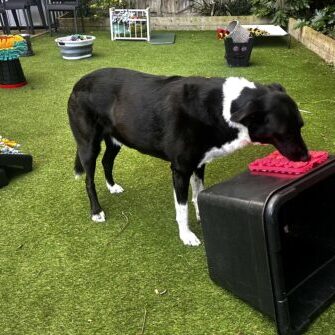
The second walk often left him more over-stimulated and overtired. He was much harder to live with in the evening. Once we stopped automatically doing that second walk and started using short bursts of training, games and other activities at home instead, he gradually became better at switching off and the walks we did take became calmer too.
But there is a question I’ve been asked so many times since the first book came out…
What happens next?
Because stopping the difficult bit is not usually where the story ends.
For some dogs and people, walking very little may be exactly what works for them long term, and there is absolutely no rule that says every dog eventually has to progress to daily street walks, busy parks, cafés, family gatherings or anywhere else simply because other dogs do.
But lots of people do want to expand their dog’s world again.
They would love to wander somewhere together without constantly looking over their shoulder. Explore a new place, enjoy a sniffy walk or simply get from the front door to the end of the road without everybody’s stress levels going through the roof.
And once things have become calmer at home, it is very easy to think, Great, they’re doing better. Let’s try the walk again.
The problem is that the next step is not really:
Stop walking your dog, decompress for a while, teach a few games at home, then go back to walking.
There’s a lot in the middle.
That “middle” is something I have become more and more interested in over the years, because it’s so often where people get stuck. A dog might learn a beautiful Hand touch in the kitchen, happily play Find it in the garden or settle really well on a boundary in the living room, but that doesn’t mean they can automatically do the same thing when they step outside and hear another dog barking, a van goes past, somebody opens a gate and a squirrel shoots across the pavement.
The skill has not disappeared. The picture has simply changed.
We can easily underestimate how much has changed too. The place is different, the surface might be different. There’s more noise, more movement, more scent and less space. Your dog may already be more excited because the lead has gone on, or more worried because the hallway and front door predict difficult experiences. Perhaps they slept badly. Perhaps something startled them earlier. Perhaps there is physical discomfort in the mix too.
Then we ask them to do something they could do perfectly well yesterday and wonder why it suddenly looks as though all our training has vanished.
It hasn’t. We may simply have made the next step too big.
This is where thinking much smaller can be enormously helpful.
“Going for a walk” sounds like one activity, but there are actually lots of different pieces inside it:
Putting the harness on.
Picking up the lead.
Moving through the hallway.
Opening the front door.
Standing on the doorstep.
Walking towards the gate.
Stepping onto the pavement.
Moving away from home.
Hearing traffic.
Seeing another dog.
Changing direction.
Stopping.
Coming home again.
Any one of those can be something your dog needs more help with, and any one of them can be practised without having to do all the others at the same time.
You might take something as simple as Hand touch and gradually grow where your dog can do it. Perhaps you start in different rooms in the house, then near the hallway, then close to the front door, then with the door open, then just outside, in the garden, by the gate and eventually on the pavement.
Some of those steps may last only a few seconds.
It doesn’t have to turn into a full training session, and you don’t need to keep going just because it went well.
That last part can be surprisingly difficult.
Your dog steps outside for ten seconds and copes beautifully, so next time you stay out for a minute. That goes well, so perhaps you walk to the corner. Then around the block. We naturally want to build on success, but success does not always mean we need to immediately do more.
Sometimes success is simply:
We went there, it felt okay, and we came home before it became too much.
For a dog who has learned that going outside eventually ends in overwhelm, that can be an incredibly useful experience.
The aim is not to discover the absolute maximum your dog can tolerate before things go wrong. It is to create enough good experiences that their world can gradually become easier.
And what that looks like will be different for every dog.
One dog may need help learning how to come back down from excitement.
Another may need much more distance from other dogs.
One might need quieter locations, another more opportunities to sniff and move freely.
One dog may happily explore a country park but find the pavement outside their own home incredibly difficult.
Sometimes the answer is not more training at all.
We change the time of day. We drive somewhere quieter. We make the outing shorter. We improve the rewards. We practise somewhere easier. We allow more recovery time afterwards. Or we look at the dog in front of us and decide that today simply is not the day.
All of those details matter because dogs are individuals.
Over time, I have found myself thinking less about “getting back to walks” and much more about growing great walks.
That difference in language matters to me, because we’re not trying to put the old walk back exactly as it was. If the old version wasn’t working, why would we?
Instead, we can use everything our dog has shown us to build something better.
That might eventually become a long, relaxed wander through the park. It might be ten peaceful minutes around a quiet industrial estate, driving somewhere for a sniff, exploring a friend’s garden or doing a little bit of training outside the house before going home again.
It may involve more games, more choice, more stopping, more watching and much less distance than you once thought a “proper” walk required.
And it may keep changing. That’s okay too.
The goal is not to create a dog who can tolerate our idea of a normal walk. It’s to help the dog in front of us feel safer, calmer and more able to enjoy the world.
That is really the question I have spent the last few years exploring in the follow up to STOP! Walking Your Dog.
The first book gave thousands of people permission to pause when walks weren’t working.
My new book is about what comes next – understanding your dog more deeply, building useful skills, making things easier rather than harder and gradually growing experiences that work for both ends of the lead.
If you would like to hear when it’s released, you can join the wait list here: https://puptalk.co.uk/book-two-wait-list/
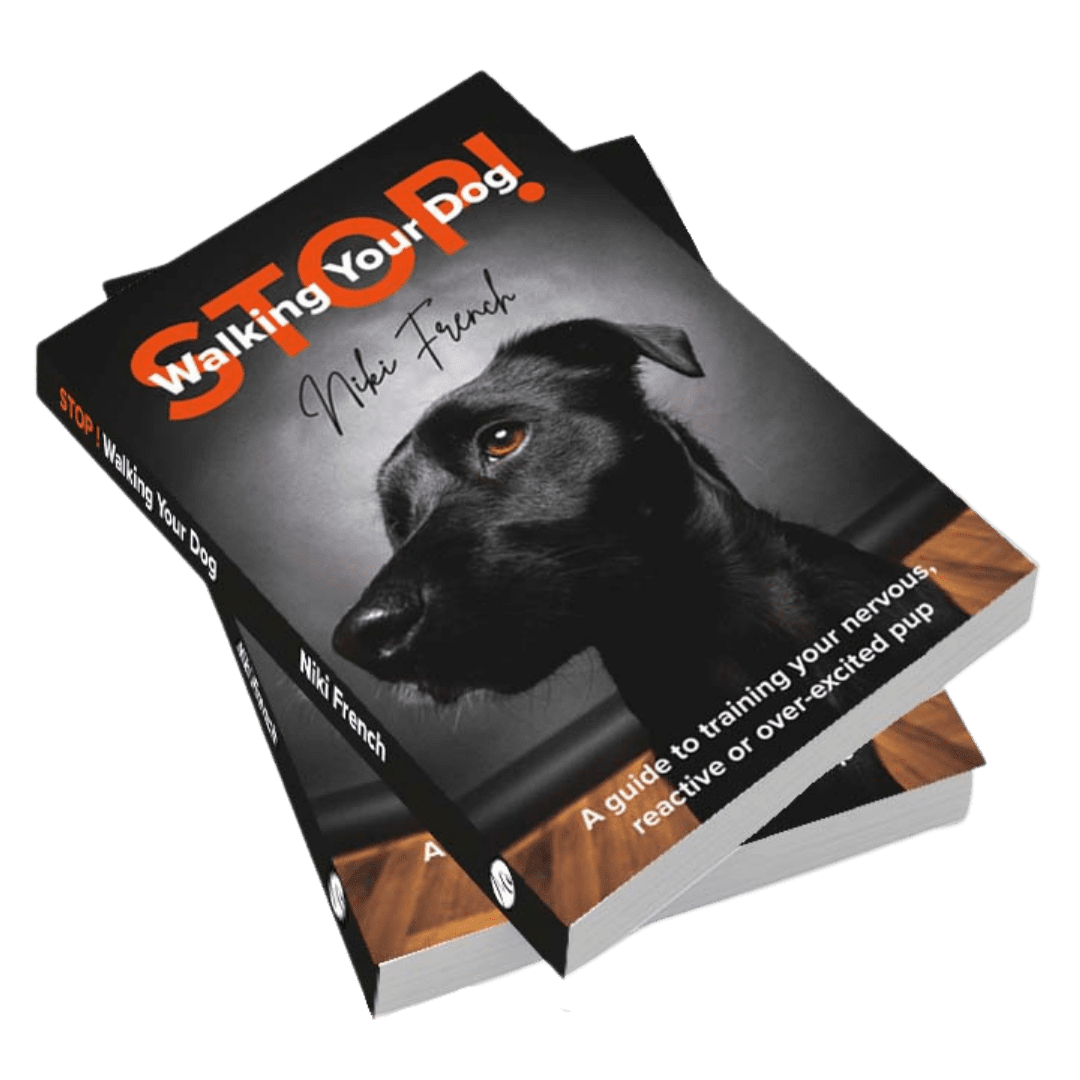
STOP! Walking your Dog
Struggling to walk your dog or puppy? Feeling stressed and overwhelmed? Walks are a human invention! Learn practical, fun and easy ways to train your dog to live calmer, happier lives
Read some related articles